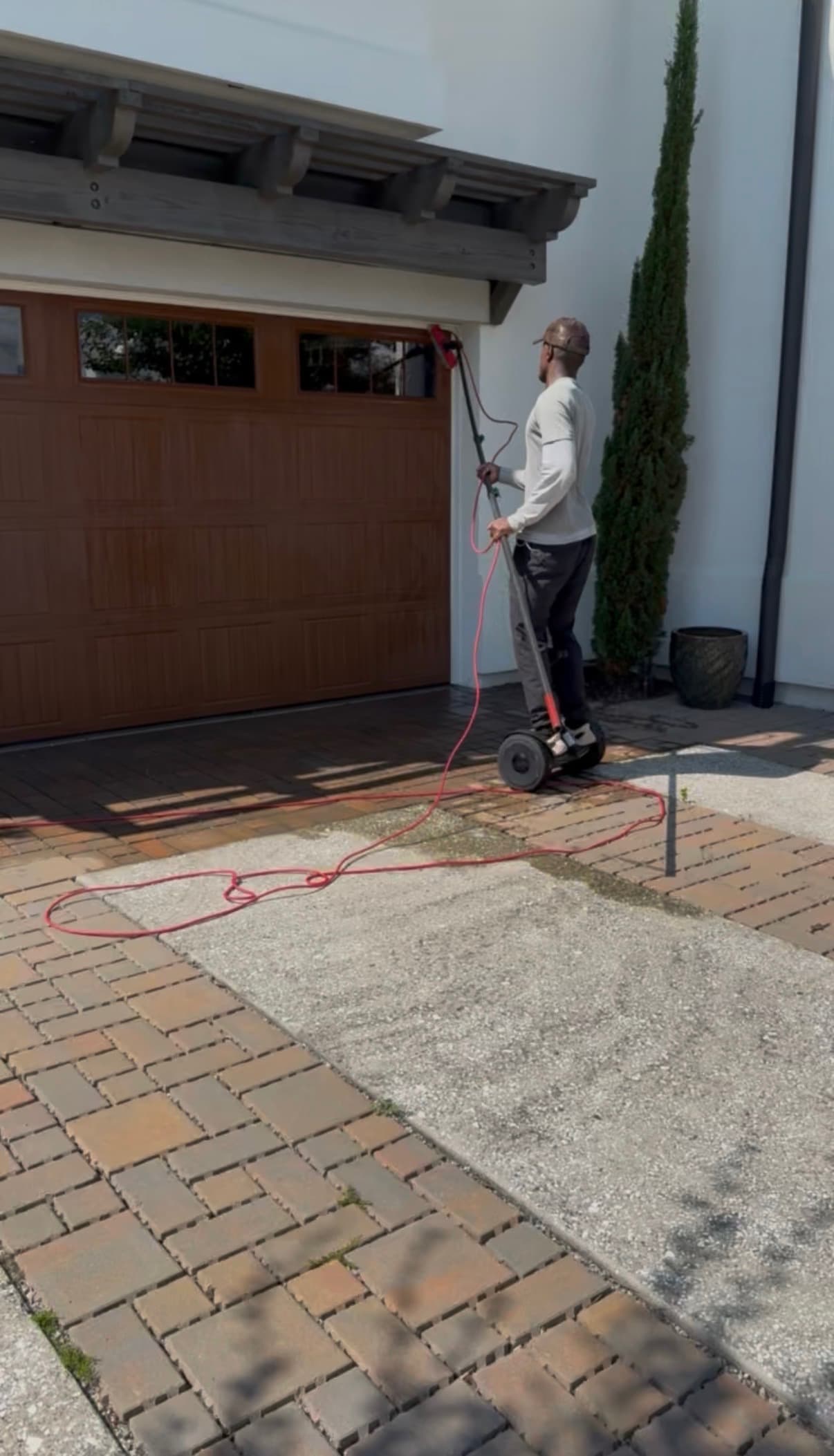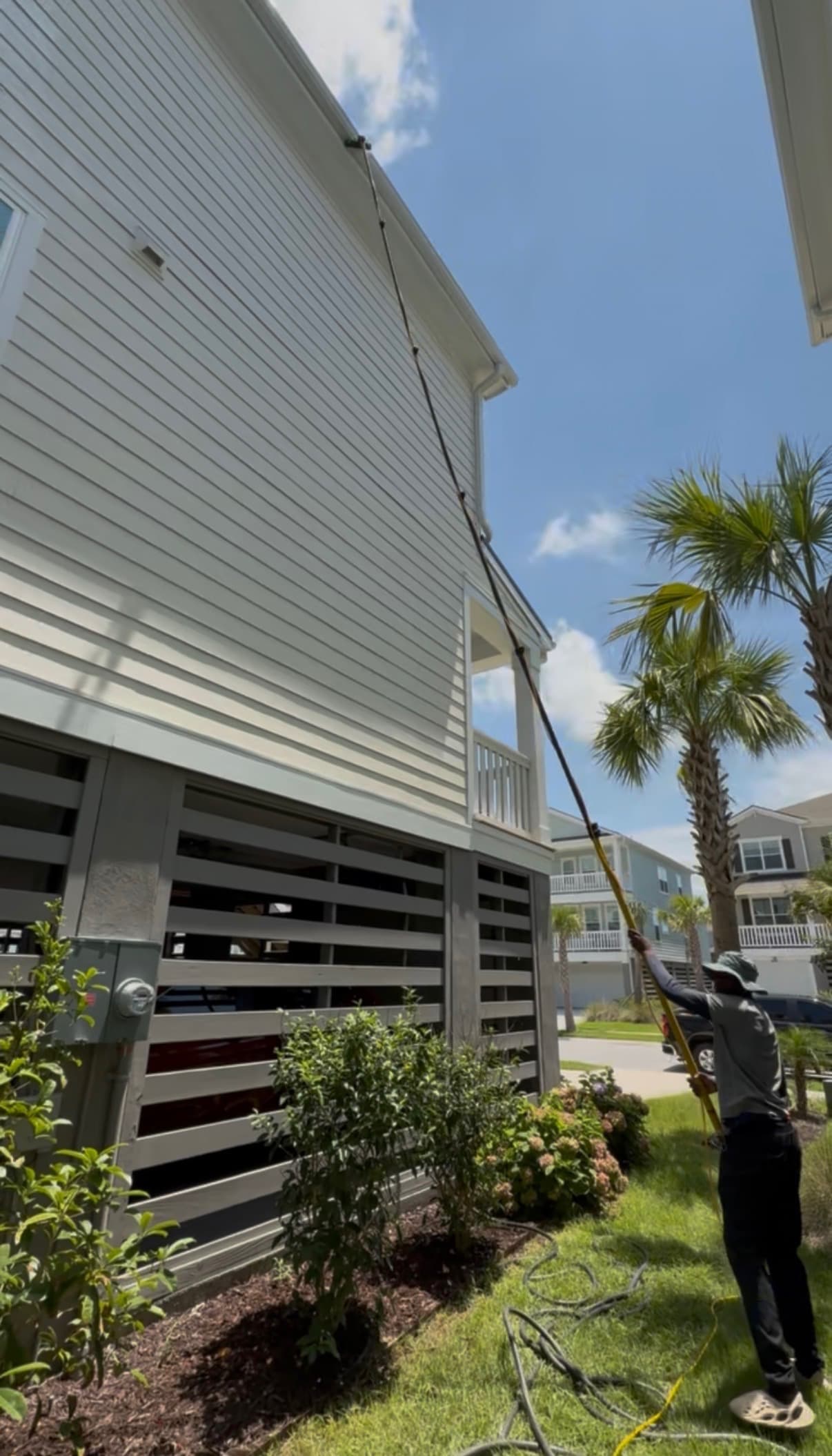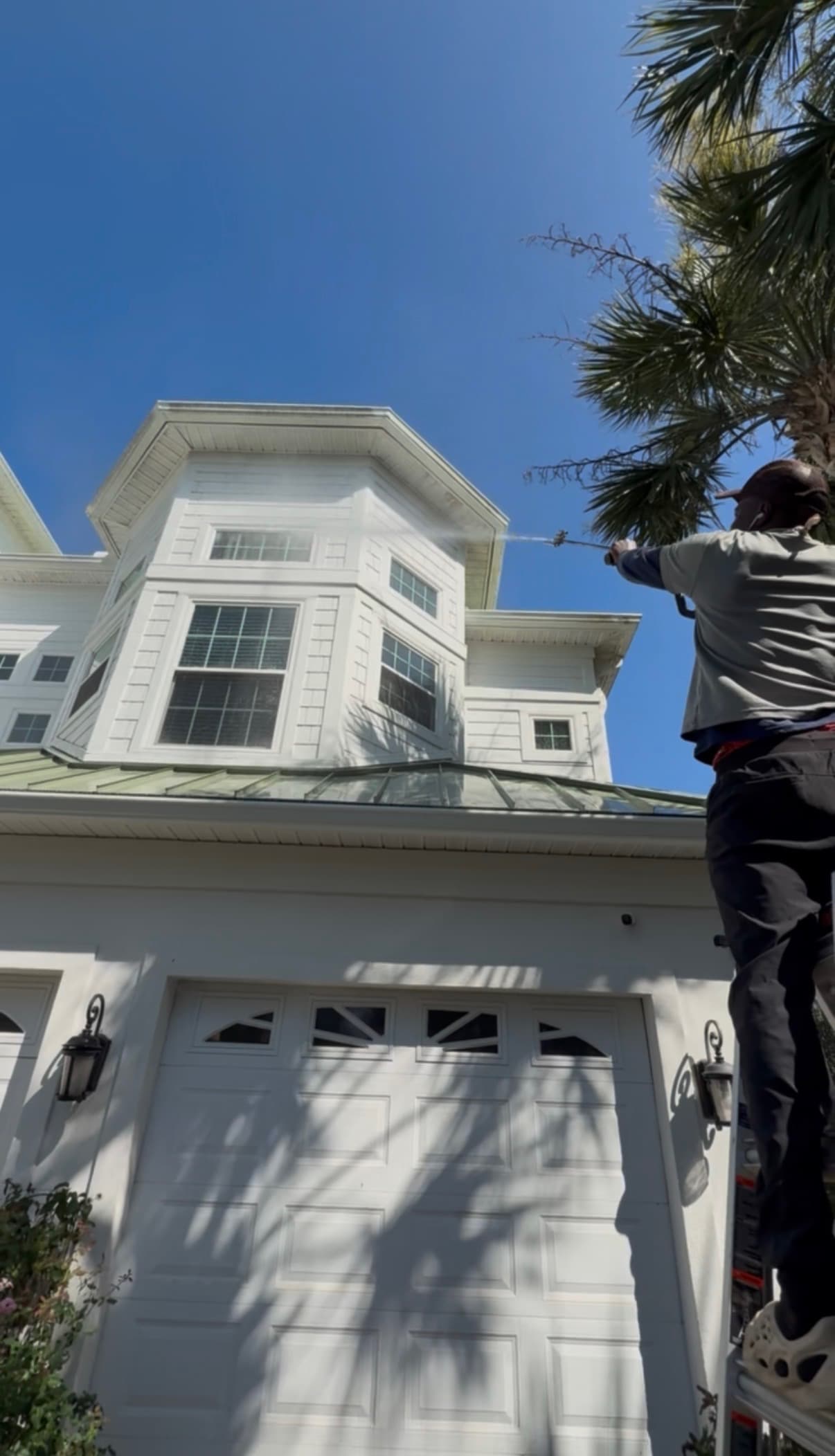
They sound similar, but using the wrong one can damage your home. Here's how to tell which method is right for each surface.
Soft washing and pressure washing both make your home look better, but they work in completely different ways. Choosing the wrong one is one of the most common ways homeowners accidentally damage their siding or roof.
What is pressure washing?
Pressure washing uses a high-force stream of water to blast away dirt, grime, and stains. That force is perfect for hard, durable surfaces like concrete driveways, sidewalks, brick, and pavers, where you want to physically scrub away buildup.
What is soft washing?
Soft washing uses low-pressure water combined with eco-friendly cleaning solutions. Instead of relying on force, it relies on the solution to kill mold, mildew, and algae at the root. Because there's no blasting, it's safe for delicate surfaces and the results last much longer.
Which surface needs which?
Use pressure washing for driveways, sidewalks, patios, pool decks, and brick. Use soft washing for vinyl and fiber-cement siding, stucco, painted wood, screens, and especially roofs, where high pressure can crack tiles, strip paint, and force water behind siding.
When in doubt, soft wash. It's the gentler, longer-lasting choice for anything on the vertical face of your home.
The bottom line
The right method depends entirely on the surface. A good crew will use both: pressure washing the hardscapes and soft washing the house itself, for a complete result with no damage. If you're not sure, we'll assess your home and recommend the safest approach for free.
Ready for a spotless home?
Get a free, no-obligation quote across the Grand Strand and Lowcountry.
Call (843) 450-0402